Skip to main content

- The dominate narrative of the Internet is that it exists to liberate, inform, and empower people.
- Industry examples; Music (downloading and distribution), the film industry, online television, and social media.
- The politics of activity and passivity in television and new media.
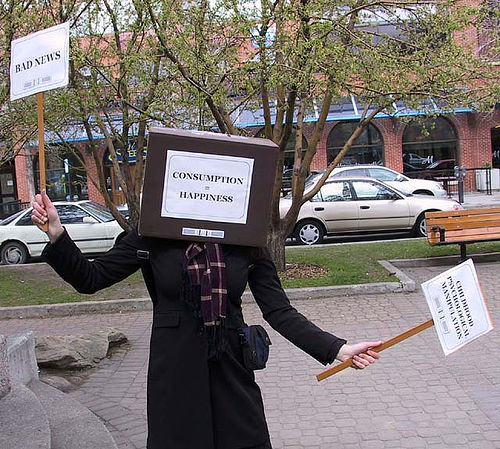
- Lunenfeld makes his case for using digital technologies to shift us from a consumption to a production model. He describes television as “the high fructose corn syrup of the imagination” and worries that it can cause “cultural diabetes”; prescribes mindful downloading, meaningful uploading, and “info-triage” (The process of gathering, sorting, and prioritizing information to identify what is relevant or important and to discard everything else) as cures, the ideological form of consumption.
- Does "downloading—and television—embody a passive, whereas uploading presents participation and production"?
- Jodi Dean - “our deepest commitments — to inclusion, equality and participation within a public — bind us to practices whereby we submit to global capital”
- Audience participation has become expected in everything; Facebook pages, online games, street teams etc
- A mobile phone and a little know-how gets you access to a potential world of auditors.
- Henry Jenkins (2006) - the ways in which platforms for online participation can make media more responsive to audiences.
- The demand to participate can become coercive, exhausting the very collective faculties it officially celebrates. While interactivity can be imagined as the “like” or “retweet,” it also encompasses the “agree to terms” button.
- Neither activity nor passivity are good in themselves; both have roles to play in culture, politics and personal life.
- The splinternet is a "characterisation of the Internet as splintering and dividing due to various factors, such as technology, commerce, politics, nationalism, religious interests."
- Term first used by Clyde Wayne Crews in 2001, and was said in a positive sense.
- Doc Searls on the splinternet - "growing distance between the ideals of the Internet and the realities of dysfunctional nationalisms. . . it all works because the Web is standardized. Google works because the Web is standardised."
- As new devices create their own ad networks, formats, technologies, and means of excessing the internet, many are able to 'hide content' from search engines.
- Stephen Lewis - the Internet could eventually be carved up into numerous geopolitical entities and borders, much as the physical world is today.
- The Atlantic magazine speculates that many of the new 'gadgets have a 'hidden agenda' to hold you in their ecosystem".
- Ads are more tightly controlled and aimed at people through platforms - large media conglomerates own or in a partnership with big businesses, and use ad space to promote their own products e.g. Google and Pandora.
- Josh Bernoff - uses the term "splinternet" to refer to "a web in which content on devices other than PCs, or hidden behind passwords, makes it harder for site developers and marketers to create a unified experience"
- Iran, China, and Saudi Arabia filter a wide range of topics, and also block a large amount of content related to those topics. South Korea filters and censors news agencies belonging to North Korea. Numerous countries also engage in 'substantial politically motivated filtering'.
- Evgeny Morozov - Questions whether the Internet brings us closer together, as despite its early ideals to 'increase understanding, foster tolerance, and ultimately promote worldwide peace' the opposite might be happening.
- There are more attempts to keep foreign nationals off certain Web properties, for example, BBC content is not available to most of Germany. Many governments are actively blocking Internet access to its own nationals, creating more of what Morozov calls a "Splinternet"
- Evgeny Morozov - "Google, Twitter, Facebook — are U.S. companies that other governments increasingly fear as political agents. Chinese, Cuban, Iranian, and even Turkish politicians are already talking up "information sovereignty" a euphemism for replacing services provided by Western Internet companies with their own more limited but somewhat easier to control products, further splintering the World Wide Web into numerous national Internets."
- OpenNet Initiative - an organisation created to battle a controlled internet. They recognise 'Internet censorship and surveillance are growing global phenomena.'
- In May 2013, former United States CIA and NSA employee Edward Snowden provided The Guardian with documents revealing the existence of far-reaching espionage systems installed by the NSA at critical junctions where Internet traffic is aggregated.
- In 2007 and 2010, Pakistan blocked Facebook and YouTube, reportedly along with Google, and Wikipedia, to contain what it described as "blasphemous" and "un-Islamic" material.
- The Church of Scientology recommended Internet censorship as a method of defending itself against what it said were a constant campaign of abuse by the group "Anonymous", along with "misinformation" and "misrepresentation" in the media. In September 2009 it asked the Australian Human Rights Commission’s Freedom of Religion and Belief to restrict access to web sites it believes incites "religious vilification."
- Cyberbalkanization - the division of the Internet or the world wide web into sub-groups with specific interests (digital tribes), where the sub-group's members almost always use the Internet or the web to communicate or read material that is only of interest to the rest of the sub-group.
- Tim Berners-Lee - "We need to re-decentralise the web." Twenty-five years on from the web's inception, its creator has urged the public to re-engage with its original design: a decentralised internet that at its very core, remains open to all.
- Knowing the NSA may be breaking commercial encryption services could result in the emergence of more networks like China's Great Firewall, to "protect" citizens.
- Social media is becoming social production.
- The Internet was invented in 1983, but the web was invented two decades later by Tim Berners-Lee, and in 1993 the first graphical browser, Mosaic, was launched.
- Andrew Keen - The Cult of the Amateur: How Today's Internet Is Killing Our Culture. The internet has evolved into a global machine for creating a world characterised by vast and growing inequality.
- Creative destruction - Collateral damage inflicted by Silicon Valley's disruption. New giants of the digital revolution produce fabulous wealth for their own capital while employing as few people as possible.
- Keen observes, on the internet “there are too many abrasive young men with personality defects and not enough accountable experts”.
- Commerce has colonised the web.
- We 'pay' for free sites not with money, but by divulging our personal information.
- Trojan - puts your computer under the control of someone else.
- In a month, 76 billion searches on Google per person.
- Online life is a trade - the currency is personal information.
- In 1994, Pizza Hut was the first business to allow you to order food online.
- There was a huge rush of excitement as the Web kicked off, and investors lost sight of old business models, such as only investing when you're assured your money back. There was a huge crash, where billions of dollars vanished in just under a year.
- What makes Google special is that it got it's power through offering us their services for free.
- Pre Internet -> Early Internet -> Now
- Print Newspapers -> News Websites -> Apps
- 9 O'Clock News -> 24 hr News Channels -> Portable platforms for news coverage
- Cinema/TV -> Satellite TV/DVD -> Streaming, Netflix
- Old media forms have had to adapt to survive, the internet has brought more competition for producers. Digital media is more fluid and transferable, it's easier to share, and is often very cheap, or even free. All media has been changed by social networking, Twitter and Facebook have a huge influence over the news and film.
- The Guardian - failing as a printed newspaper due to news sites, so adapted into its own web page. Now, more than 100 million people use it per month. The articles are free, but money is made through advertising. The Guardian is a web 2.0 product.
- TV news is no longer ‘appointment television’. Bulletins and packages are all online. So TV news is synergetic with online news: ‘Go to our website for more on this story’.
- Pre-internet, the film industry controlled distribution, but online piracy and file-sharing challenged this. To combat illegal sites, legitimate businesses like Netflix were set up, turning film into 'impulse' purchases.
- David Gauntlett - Web 2.0, and the rise of the prosumer (he coined this term.)
- Dan Gillmor - How audiences have been changed by the internet. Citizen Journalism.
- Marc Prensky - Coined the term 'digital natives' about the new generation
- Henry Jenkins - Considers how the internet is bringing us all together
- William Merrin - How the internet is forcing every media form to change
- Clay Shirky - All news providers will have to adapt to survive
- Michael Wesch - 'The machine is us/ing us'
- Marshall McLuhan - Was writing about the internet before it even existed. 'The medium is the message.'
- Production = e.g. How the Guardian is now a converged multi-media product
- Distribution = On every platform, smartphones, tablet, and print
- Marketing = Integration with social networks, advertising, sponsorship
- The Times and The Sun (both owned by Rupert Murdoch) have a hard paywall. The Daily Telegraph has metered access and The Guardian is free, but needs advertising.
- Broadsheets (e.g. the Guardian) attracts different readers and advertising than tabloids (e.g. the Sun)
- Gillmore explores how the explosion of grassroots internet journalism has changed the way news is handled. Corporations can no longer control the news because it's available in real time, worldwide, via social networks.
- A Web 2.0 site allows its users/audiences to interact and contribute to the website's content.
- 'Practise without theory is empty; theory without practise is blind.'
- Nicholas Abercrombie - 'the boundaries between genres are shifting and becoming more permeable'. This is about the creation of subgenres and hybrids to maximise audience appeal. He also suggested that ‘We derive pleasure from observing how the conventions of a genre
are manipulated’. Knowing what to expect in a text makes us enjoy the unexpected.
- In a response to audience desires, the film industry has let clear-cut genres endure. They maintain a fundamental sameness from decade to decade, they function ritually.
- David Bordwell - 'any theme may appear in any genre'. Essentially, genre is hard to classify as
pure.
- Jacques Derrida - 'A text cannot belong to no genre, it cannot be without... a genre... there is no genreless text.'
- Jane Feuer - Genre is abstract and becoming harder to identify.
- Fowler – ‘one advantage of genres is that they can rely on readers already having knowledge and
expectations about the works within a genre’.
- Gledhill – ‘Genres can be seen as a kind of shorthand, increasing the efficiency of communication’.
This means that because audiences already know what to expect within a genre, it is not necessary to
explain all of the details to them, narratives can therefore be condensed.
- Hodge and Kress – ‘genres are typical forms of texts which links producers, consumers, topic, medium,
manner and occasion’. E.g. a Disney fairytale using computer generated imagery, released in
multiplex’s and DVD and internet availability.
- Katie Wales - 'genre is... an intertextual concept.' This means we make sense of a text through our
experiences of other texts and repeated tropes.
- Web 2.0 does not refer to an update to any technical specification, but to changes in the way Web pages are designed and used. The term was coined in 1999 by Darcy DiNucci but became popular in 2004 when used by Tim O'Reily.
- A Web 2.0 website allows users to interact and collaborate with each other and the site itself.
- Web 1.0 is a retronym for the first stage of the World Wide Web. A Web 1.0 site may have had a guestbook page to publish visitor comments, instead of a comment section at the end of each page. Some characterisations of Web 1.0 are; static pages, proprietary HTML extensions and content served from the server's filesystem instead of a relational database management system.
- Terry Flew on the shift from Web 1.0 to 2.0 - "Move from personal websites to blogs... from publishing to participation."
Comments
Post a Comment